RTX 6000 in 2026: the RTX PRO 6000 Blackwell vs the RTX 5090, and what we know about the future gaming series

RTX 6000 RTX 6000 series RTX PRO 6000 Blackwell RTX PRO 6000 vs RTX 5090 RTX 6000 Ada RTX 60 series

Today, “RTX 6000” means a professional card: the RTX PRO 6000 Blackwell with 96 GB of GDDR7. We explain who it is for, what separates it from the GeForce RTX 5090 and why it is not a gaming card. We also sum up the future RTX 60 gaming series (Rubin): nothing announced yet, and rumors now pointing to 2028.

RTX 6000: which card are we talking about in 2026?

Search for “RTX 6000” and you will find three different professional cards, plus a future GeForce lineup that does not exist yet. In short:

  • The RTX PRO 6000 Blackwell is the current RTX 6000. Announced by NVIDIA in March 2025, it packs 96 GB of GDDR7 and the same GB202 chip as the RTX 5090. It is the card this guide focuses on.
  • The RTX 6000 Ada Generation (late 2022) is the previous generation: 48 GB of ECC GDDR6, 18,176 CUDA cores and 300 W. It is still listed for workstations.
  • The Quadro RTX 6000 (2018, Turing architecture, 24 GB of GDDR6) was the first card to carry the name.
  • There is no “GeForce RTX 6000” for gamers. The next gaming generation, usually called the RTX 60 series (RTX 6090, 6080 and so on), has not been announced. The latest rumors point to 2028.

If you want the fastest gaming card today, that is the RTX 5090, not an RTX 6000. And if you are looking for the release date of the future RTX 60 cards, it is all in our RTX 6000 Rubin specs and release date article.

Card Architecture Memory Who it is for Status in October 2026
RTX PRO 6000 Blackwell Blackwell (GB202) 96 GB GDDR7 ECC AI, 3D rendering, simulation Available (workstations and servers)
RTX 6000 Ada Generation Ada Lovelace 48 GB GDDR6 ECC Workstations Previous generation, still listed
Quadro RTX 6000 Turing 24 GB GDDR6 Workstations Older generation (2018)
GeForce RTX 60 series (RTX 6090…) Rubin (announced for data centers) Rumors only Gamers Not announced: rumored for 2028
Swipe to view more

RTX PRO 6000 Blackwell: the RTX 6000 you can buy today

The RTX PRO 6000 Blackwell uses the GB202 chip, the largest of the Blackwell generation, built on TSMC 4N. According to NVIDIA and PNY spec sheets, it has 24,064 CUDA cores, 752 fifth-gen Tensor cores and 188 fourth-gen RT cores, with 96 GB of ECC GDDR7 on a 512-bit bus (1,792 GB/s).

It comes in three versions that share the same chip and the same 96 GB:

  • Workstation Edition: the most powerful version, 600 W, double flow-through cooling, dual-slot.
  • Max-Q Workstation Edition: capped at 300 W with a blower fan, designed for up to four cards in one workstation.
  • Server Edition: passively cooled for servers, with configurable power from 400 to 600 W.

Other pro-only features: ECC memory, MIG partitioning (up to four 24 GB instances), four DisplayPort 2.1b outputs and no HDMI, plus professional drivers certified for CAD, rendering and compute software.

Version Max power Cooling Memory bandwidth Intended use
Workstation Edition 600 W Double flow-through 1,792 GB/s Single-GPU workstation, maximum performance
Max-Q Workstation Edition 300 W Blower (active) 1,792 GB/s Multi-GPU workstations (up to 4 cards)
Server Edition 400 to 600 W (configurable) Passive 1.6 TB/s Servers and data centers
Swipe to view more
PNY NVIDIA RTX PRO 6000 Blackwell Workstation Edition 96 GB (VCNRTXPRO6000B-PB)

The Workstation version of the RTX PRO 6000 Blackwell, distributed by PNY: 96 GB of ECC GDDR7, 24,064 CUDA cores and 600 W. The card to get if you run large AI models locally or render very heavy 3D scenes on a single GPU.

Pros
  • 96 GB of ECC GDDR7: three times the memory of an RTX 5090
  • 24,064 CUDA cores, about 11% more than the RTX 5090
  • MIG, certified pro drivers and four DisplayPort 2.1b outputs
Cons
  • Workstation pricing, in a different league from any GeForce
  • 600 W: size your power supply and case accordingly
  • No HDMI output, and little point for gaming alone
FranceCheck the price in my country

RTX PRO 6000: who is it for?

NVIDIA pitches the RTX PRO 6000 at AI, rendering, simulation and video. In practice, it targets three profiles:

  • Local AI: with 96 GB on a single card, it loads language and image-generation models far too big for the 32 GB of an RTX 5090.
  • 3D rendering, VFX and video: very heavy scenes fit entirely in memory, and four ninth-gen NVENC encoders speed up video exports.
  • Engineering and simulation: ECC memory, drivers certified for professional software, and Max-Q or Server versions for multi-GPU workstations and servers.
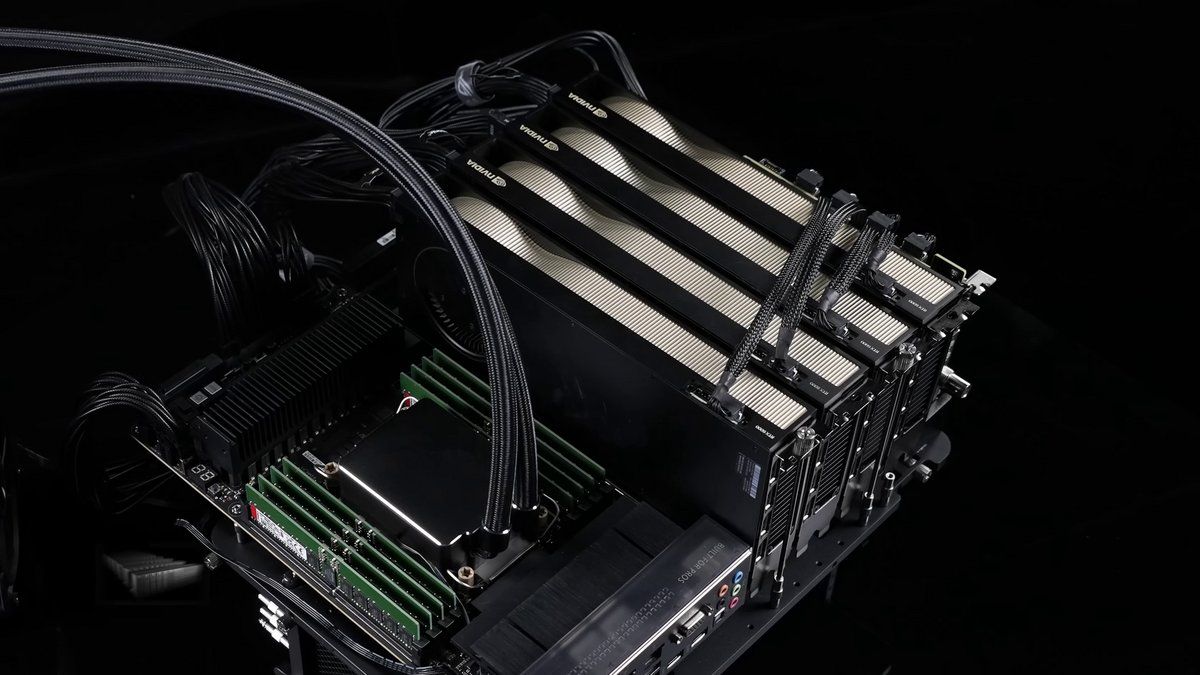
Workstation 4 × NVIDIA RTX 6000 Ada Generation Click to enlarge

PNY recommends at least as much system RAM as video memory, ideally twice as much: for an RTX PRO 6000, that means 96 GB of RAM at minimum and 192 GB recommended. It belongs in a real workstation, not a gaming PC.

For a gamer, even a wealthy one, it makes no sense: it costs several times as much as an RTX 5090 for a few percent more in games, as shown below.

RTX PRO 6000 vs RTX 5090: what is the difference?

Both cards share the GB202 chip and the same memory bandwidth. The RTX PRO 6000 enables more cores, triples the memory and adds pro features. The RTX 5090 remains a GeForce, with Game Ready drivers and an HDMI output.

Spec RTX PRO 6000 Blackwell (Workstation) GeForce RTX 5090
Chip GB202 GB202
CUDA cores 24,064 21,760
Memory 96 GB GDDR7 ECC 32 GB GDDR7
Bus and bandwidth 512-bit, 1,792 GB/s 512-bit, 1,792 GB/s
Power 600 W 575 W
Display outputs 4 × DisplayPort 2.1b 3 × DisplayPort 2.1b + 1 × HDMI 2.1b (Founders Edition)
Drivers Certified professional GeForce Game Ready
Gaming (GamersNexus tests, 4K) 5 to 14% faster than the 5090 Baseline
Price level Workstation pricing Top-end consumer
Swipe to view more

In games: barely faster than an RTX 5090

In GamersNexus testing, the RTX PRO 6000 beats the RTX 5090 by 5 to 14% depending on the game: about 6% in Dragon’s Dogma 2 at 4K, 7% in Starfield and Black Myth: Wukong, and up to 13 to 14% in Cyberpunk 2077 and Dying Light 2. der8auer measured similar gaps, from 3 to 14% depending on the title. A real gain, but a tiny one given the price difference.

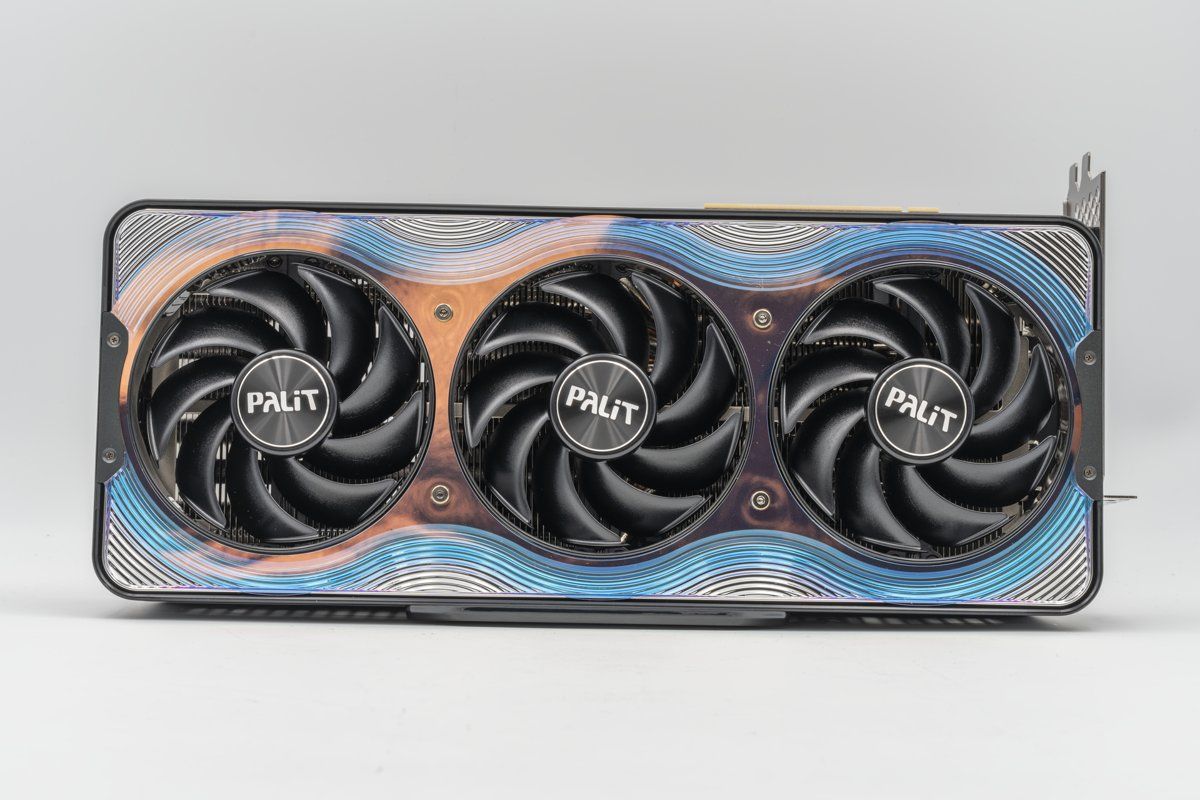
GeForce RTX 5090 (Palit GameRock) Click to enlarge

The RTX 5090 itself has been in the news. On October 10, 2026, leakers claimed NVIDIA had stopped supplying GB202 chips for the 5090 and was reserving them for RTX PRO cards. On October 16, NVIDIA senior vice president Jeff Fisher denied any discontinuation: the card “has not been discontinued” and will keep shipping, even though supply is tight, according to Taiwan’s CNA and TechPowerUp. We cover it in detail in our article on the reported RTX 5090 end of production.

Bottom line: the RTX 5090 is still the card to get for uncompromising 4K gaming, if you can find one and your budget allows. First check that your case fits an RTX 5090 and that your power supply is up to it: NVIDIA recommends at least 1,000 W. If the 5090 is nowhere to be found, the RTX 5080 is the most sensible 4K alternative.

Gigabyte GeForce RTX 5090 Gaming OC 32G (GV-N5090GAMING OC-32GD)

A custom RTX 5090 from Gigabyte: 32 GB of GDDR7 on a 512-bit bus, a rated 2,550 MHz clock, three DisplayPort 2.1a and one HDMI 2.1b. The fastest GeForce, and the closest you can get to an RTX PRO 6000 in games for far less.

Pros
  • 21,760 CUDA cores and 32 GB of GDDR7: the fastest GeForce
  • Game Ready drivers, DLSS 4 and DLSS 5
  • HDMI 2.1b output, unlike the RTX PRO 6000
Cons
  • Scarce stock, selling far above launch pricing
  • 575 W: NVIDIA recommends a 1,000 W power supply
  • Huge card: check the room in your case
FranceCheck the price in my country
Gigabyte GeForce RTX 5080 Gaming OC 16G (GV-N5080GAMING OC-16GD)

If the RTX 5090 is out of stock or out of budget, the RTX 5080 is the most logical GeForce for 4K with DLSS. This Gigabyte model is rated at 2,730 MHz, with 16 GB of GDDR7 on a 256-bit bus.

Pros
  • Very comfortable at 4K with DLSS 4
  • 360 W: far less power-hungry than a 5090
  • DLSS 5 support, like every RTX 50 card
Cons
  • Only 16 GB, half the memory of the 5090
  • Still a high-end purchase
  • Availability varies right now
FranceCheck the price in my country

RTX 60 series: what we know about the future gaming “RTX 6000”

Short version: nothing has been announced. Asked by Tom’s Hardware in September 2026, NVIDIA said it does not comment on rumors or unannounced products. Here is what is official and what is not:

  • Official: the architecture is called Rubin. It already powers NVIDIA’s data center products (the Vera Rubin platform), which always ship before GeForce cards.
  • Rumor: according to leaker kopite7kimi (September 2026), GeForce Rubin chips (GR20x) are now planned for 2028 rather than late 2027. Kepler_L2 lists five chips, from GR202 to GR207, all in 2028, and says a future RTX 6060 could slip to 2029.
  • Rumor: the RTX 6090 would use the GR202 chip on a 3 nm process, with 32 GB of GDDR7 on a 512-bit bus, like the RTX 5090.
  • Why the delay? The memory shortage and the priority given to AI products. The RTX 50 SUPER cards, which leaks had pointed to for 2026, are also said to be stalled by the price of GDDR7.

One correction to what was written in 2025: DLSS 5 is not reserved for the future RTX 60 cards. NVIDIA announced it in March 2026 and launched it on September 1, 2026 in NBA 2K27 for every GeForce RTX 50 card.

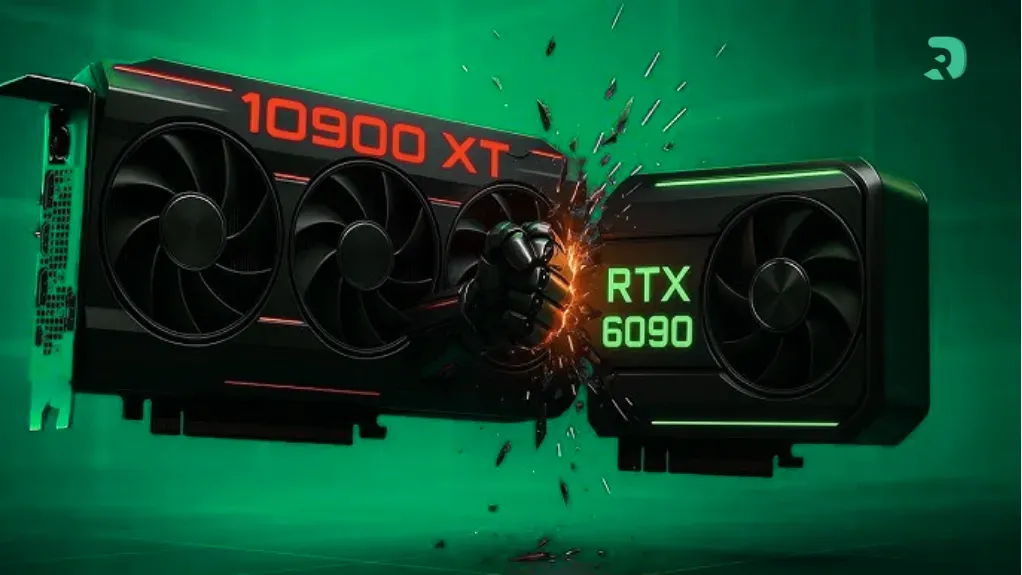
For detailed specs and the release date of the RTX 6090 and its siblings, see our RTX 6000 Rubin specs, release date and rumors article, updated as leaks come in. On AMD’s side, the RDNA 5 response is also said to be delayed: a single chip in 2027 and the rest in 2028, according to Kepler_L2. Our Radeon RX 10900 XT article has the details.

Item Status Source
Rubin architecture Official (data center) NVIDIA
GeForce RTX 60 (RTX 6090, 6080…) Not announced NVIDIA does not comment on rumors (Tom’s Hardware, September 2026)
GeForce Rubin launch in 2028 Rumor kopite7kimi, Kepler_L2 (September 2026)
RTX 6060 in 2029 Rumor Kepler_L2 (October 2026)
RTX 6090: GR202, 3 nm, 32 GB GDDR7 512-bit Rumor Leaks reported by TechPowerUp
DLSS 5 Official, available on every RTX 50 card NVIDIA, September 1, 2026
Swipe to view more

FAQ: RTX 6000, RTX PRO 6000 and the RTX 60 series

Does the RTX 6000 already exist?

Yes, but only as a professional card. The current version is the RTX PRO 6000 Blackwell (96 GB of GDDR7). It succeeded the RTX 6000 Ada Generation (48 GB) and the Quadro RTX 6000 (24 GB).

Can you game on an RTX PRO 6000?

Yes, it runs games 5 to 14% faster than an RTX 5090 in GamersNexus testing. But it costs several times as much, uses pro drivers and has no HDMI output. For gaming, the RTX 5090 is the better choice.

What is the difference between the RTX 6000 Ada and the RTX PRO 6000 Blackwell?

The RTX 6000 Ada (2022) uses the Ada Lovelace architecture, 48 GB of ECC GDDR6 and 300 W. The RTX PRO 6000 Blackwell (2025) moves to 96 GB of ECC GDDR7, 24,064 CUDA cores and up to 600 W in the Workstation version.

When will the GeForce RTX 6090 or the RTX 60 series come out?

NVIDIA has not announced anything. The latest rumors point to 2028 for the high end. Details are in our RTX 6000 Rubin article.

Has the RTX 5090 been discontinued?

No, according to NVIDIA. On October 16, 2026, Jeff Fisher denied the end of production while acknowledging that supply is tight.

Conclusion: the RTX 6000 is a pro card, the gaming RTX 60 will have to wait

In 2026, “RTX 6000” means the RTX PRO 6000 Blackwell: a 96 GB card for AI, rendering and simulation, barely faster than an RTX 5090 in games but with three times the memory. For gaming, the RTX 5090 is still the top card, and the RTX 5080 the realistic alternative. As for the GeForce RTX 60 series, it has not been announced and rumors push it to 2028, so there is no point delaying a purchase for it. To compare other cards, our graphics card guide is a good place to start.